

Christian Ray Flores here,
Last night I was talking about this with a friend over cigars on my back porch enjoying the soothing sound of a gentle rain in Austin. Why does success feel hollow so often to so many?
We talked about good friends who had built empires and lost so much more than they bargained for.
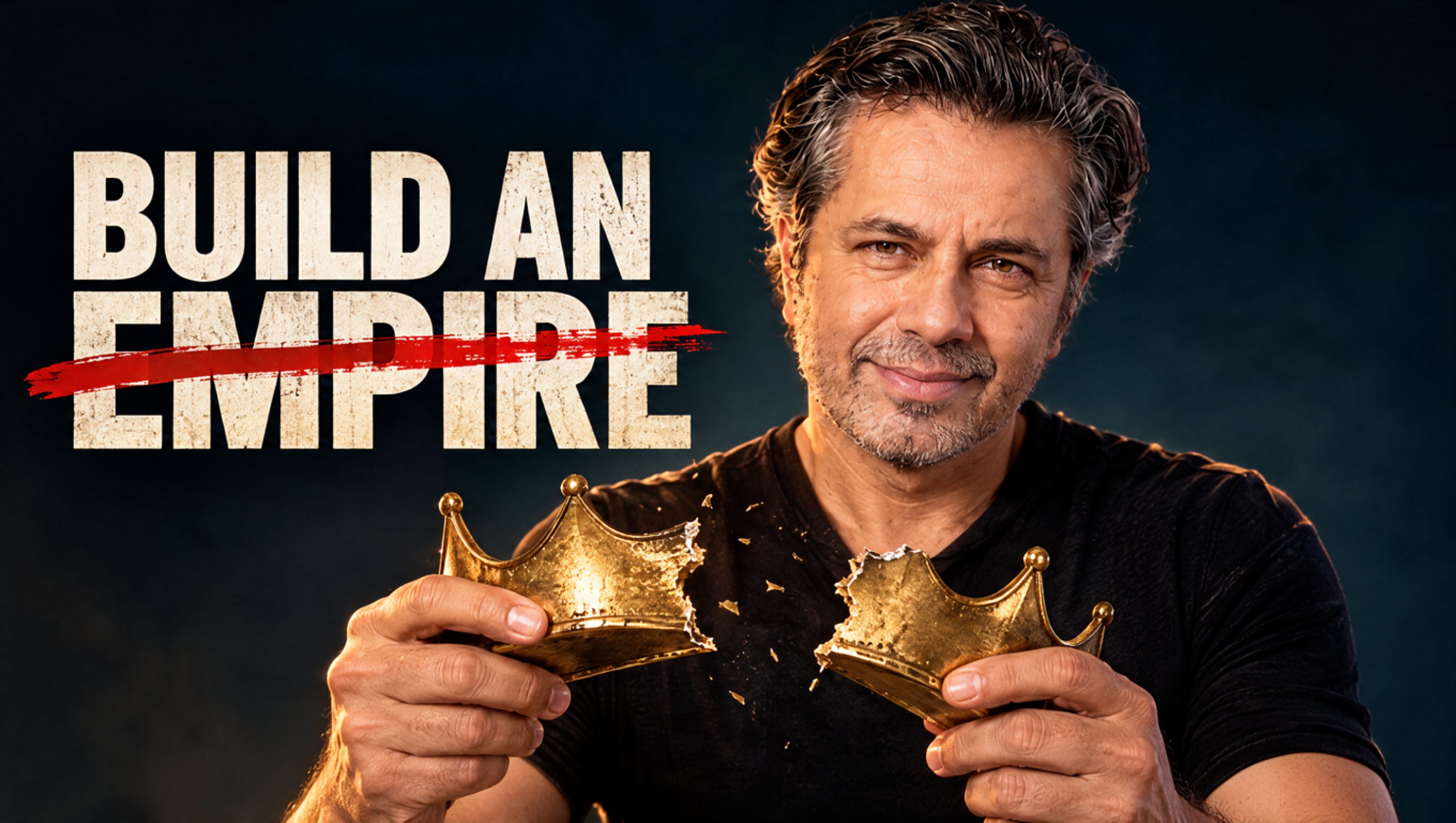
I was lucky enough to have success early and to learn from it.
As a recording artist. I was selling millions of albums, my latest song was number one, and every night in sports arenas thousands of people sang my songs right back to me. It’s hard to overstate how good that feels.
Then came the pats on the back, the smiles backstage, dinner with the rowdy crew, and then the hotel room. And a sense of emptiness and joylessness would set in.
It was confusing, because I had everything I’d worked for, and it didn’t feel the way I thought it would.
You may not be in show business, but you’ve probably had your own version of that hotel room. On paper, you’re doing well, but it feels empty.
If that’s you, nothing is wrong with you. But it is a signal you should pay attention to. Because left alone, that hollow feeling will drain away the all your drive, wonder and creativity.
We’ll look at why every win wears off, how the what fuels you determines where you end up and how to build a life that leaves you perpetually fulfilled.
After you read this, make sure you watch my latest video. And if you haven’t yet - subscribe to the Youtube channel.
so… why does success feel hollow?
hedonic adaptation
It’s called hedonic adaptation.
I’ve worked with and coached people who made a lot of money, Olympic champions, Super Bowl winners, politicians and entrepreneurs.
It happens to all of us, and it’s so well known that the smartest entrepreneurs who have a big exit often remove “the prize” of tons of money and invest it in something new to mitigate the massive slump in satisfaction.
What is so sweet and desirable in our imagination feels amazing when we get it and then inevitably becomes normal and mundane.
Your brain is wired to notice change.
When something beats what you expected, your reward chemistry fires hard. Once you expect it, it barely fires at all. That fade has a job: it keeps you reaching for the next thing.
Whether it leaves you empty or fulfilled depends on what fuels your journey in the first place.
fuel
Most people don’t truly know what motivates them to excel. It’s no secret that most overachievers have childhood trauma to thank as fuel, at least in part.
Bad fuel is basically the motivation based in pain rather than purpose.
My bad fuel: I was (and still sometimes am) an immigrant boy wanting to fit in. An outsider wanting to be an insider.
Another one was, for a long time, a young man looking for love but terrified of commitment because of the trauma of my parents’ divorce.
So I’d be hyper-fixated on the greatest popularity I could possibly reach and would sabotage every serious relationship I was in.
The most important part of bad fuel is that it lies to you and makes you build something as an overreaction to pain not a strategy focused on purpose.
That is a massive deal.
So how do you mitigate hedonic adaptation and minimize bad fuel?
What makes success fulfilling, sweet and generally the gift that keeps on giving?
switch the focus from a prize to the journey
Entrepreneurship is a great vehicle for this because it’s about the building, which is as exciting as, and more rewarding than, the prize.
With all the heartache and risk of starting your own thing, you enjoy building it way more than building someone else’s thing.
You’ll see this if you listen to entrepreneurs talk to each other: they love the journey more than the prize.
This is why when I work on people’s brands, I first reduce all of what they do to the stuff that lights them up.
switch the fuel from pain to purpose
Easier said than done, but it can be done if you develop a spiritual practice and get a mentor or coach to help you sort this out.
The good fuel for me looked different than what got me to my first mountaintop.
The bad fuel told me I need an empire. I did and could have kept building it.
Luckily I realized that building an empire was more me compensating for pain than having clarity on purpose. I was so lucky to learn that in my 20s.
So I became that crazy person in show business who proactively transitioned from building an empire to building a tribe.
From an audience the size of a small country to one the size that allows me to help people I like make lifelong, transformative change. I love the intimacy of the work I do with people as much as the impact it has on their life trajectory.
I also shifted from a business that could support an empire to a business that would support a lifestyle I wanted. Which was to be around my wife, children and closest friends, all the time. To build brands that inspire me and to help the poorest of the poor.
So with all the ups and downs of entrepreneurship success in my world is now sweet, fulfilling and deeply meaningful.
What does it look like for you? From personal experience I can tell you this:
It’s worth taking a step back and rebuilding whatever needs rebuilding.
Send this to someone who needs to read it.